| Search | About | Preferences | Interact | Help | |
| 150 million books. 1 search engine. | ||
› Find signed collectible books: 'All Tomorrow's Parties'
Although Colin Laney (from Gibson's earlier novel Idoru) lives in a cardboard box, he has the power to change the world. Thanks to an experimental drug that he received during his youth, Colin can see "nodal points" in the vast streams of data that make up the worldwide computer network. Nodal points are rare but significant events in history that forever change society, even though they might not be recognizable as such when they occur. Colin isn't quite sure what's going to happen when society reaches this latest nodal point, but he knows it's going to be big. And he knows it's going to occur on the Bay Bridge in San Francisco, which has been home to a sort of SoHo-esque shantytown since an earthquake rendered it structurally unsound to carry traffic.
Colin sends Barry Rydell (last seen in Gibson's novel Virtual Light) to the bridge to find a mysterious killer who reveals himself only by his lack of presence on the Net. Barry is also entrusted with a strange package that seems to be the home of Rei Toi, the computer-generated "idol singer" who once tried to "marry" a human rock star (she's also from Idoru). Barry and Rei Toi are eventually joined by Barry's old girlfriend Chevette (from Virtual Light) and a young boy named Silencio who has an unnatural fascination with watches. Together this motley assortment of characters holds the key to stopping billionaire Cody Harwood from doing whatever it is that will make sure he still holds the reigns of power after the nodal point takes place.
Although All Tomorrow's Parties includes characters from two of Gibson's earlier novels, it's not a direct sequel to either. It's a stand-alone book that is possibly Gibson's best solo work since Neuromancer. In the past, Gibson has let his brilliant prose overwhelm what were often lackluster (or nonexistent) story lines, but this book has it all: a good story, electric writing, and a group of likable and believable characters who are out to save the world ... kind of. The ending is not quite as supercharged as the rest of the novel and so comes off a bit flat, but overall this is definitely a winner. --Craig E. Engler [via]
More editions of All Tomorrow's Parties:
› Find signed collectible books: 'The Art of the X-Files'
Reflecting our world in a uniquely haunting way, The X-Files has engendered a new look of mystery, conspiracy, phenomenon, and fear. These enigmatic, elusive images have had a profound and compelling impact on our visual reality, both feeding into and drawing from mainstream America's fascination with the subversive, the disowned, and the disillusioned. This innovative volume, a visual response to Chris Carter's dark, uneasy creation, collects the works of more than sixty cutting-edge artists.
Representing a cross section of contemporary visual arts, these photographers, painters, scultptors, graphic designers, and digital media artists have produced works that reflect their personal interpretation of The X-Files: as a cultural phenomenon, as a new chapter in television history, as an engrossing cosmic conspiracy. Many pieces are accompanied by a statement from the artist, explaining the inspiration behind his or her contribution--ranging from an episode to a line of dialouge, form a particular incident to a theme within the entire series. Illustrated with video stills from the episodes, this volume shows the strong influence of The X-Files imagery on the artistic mind.
In this introduction to this powerful collection of images, acclaimed writer William Gibson noted that The X-Files "is a disturbing and viscerally satisfying expression of where we've come from, where we are today, and all those places we simultaneously yearn and dread to go." Starling, beautiful, and thought-provoking, this unusual volume expands the creative vision of The X-Files, and of contemporary art itself. [via]
More editions of The Art of the X-Files:
› Find signed collectible books: 'The Art of the X-Files'
Reflecting our world in a uniquely haunting way, The X-Files has engendered a new look of mystery, conspiracy, phenomenon, and fear. These enigmatic, elusive images have had a profound and compelling impact on our visual reality, both feeding into and drawing from mainstream America's fascination with the subversive, the disowned, and the disillusioned. This innovative volume, a visual response to Chris Carter's dark, uneasy creation, collects the works of more than sixty cutting-edge artists.
Representing a cross section of contemporary visual arts, these photographers, painters, scultptors, graphic designers, and digital media artists have produced works that reflect their personal interpretation of The X-Files: as a cultural phenomenon, as a new chapter in television history, as an engrossing cosmic conspiracy. Many pieces are accompanied by a statement from the artist, explaining the inspiration behind his or her contribution--ranging from an episode to a line of dialouge, form a particular incident to a theme within the entire series. Illustrated with video stills from the episodes, this volume shows the strong influence of The X-Files imagery on the artistic mind.
In this introduction to this powerful collection of images, acclaimed writer William Gibson noted that The X-Files "is a disturbing and viscerally satisfying expression of where we've come from, where we are today, and all those places we simultaneously yearn and dread to go." Starling, beautiful, and thought-provoking, this unusual volume expands the creative vision of The X-Files, and of contemporary art itself. [via]
More editions of The Art of the X-Files:
› Find signed collectible books: 'Burning Chrome and Other Stories'
When "Burning Chrome," the title story in William Gibson's first short story collection, appeared, it grabbed readers by the collar and shook them up a bit. Science fiction in the late '70s had grown a little bit stale and, worse, safe. "Burning Chrome" offered a fresh look at a future that was gritty, real, and more than a little dangerous. These stories brought high tech out of antiseptic university laboratories and corporate boardrooms and put it in the streets and alleyways where people found their own uses for it. Sometimes those uses were even legal.
The philosophy of cyberpunk, the movement that Gibson's early books kicked off, is most explicitly stated in "The Gernsbach Continuum," with its rejection of the '30s ideal of a future of flying cars and shining cities. But the real meat of this collection is found in those stories where Gibson involves us with the people who inhabit his world. The technical boy of "Johnny Mnemonic" and the thief-turned-game-player of "Dogfight" (cowritten with Michael Swanwick) would be right at home on the same streets. Most intense and more enigmatic is the recording engineer of "The Winter Market," who is overwhelmingly attracted to and repulsed by the greatest artist he ever worked with. Still, "Burning Chrome," with its tale of vengeance and high-stakes theft, remains the centerpiece of this collection. Read it and you will know why William Gibson became and remains one of the top writers in science fiction. --Greg L. Johnson [via]
› Find signed collectible books: 'Count Zero'
In the Matrix of cyberspace, angels and voodoo zaibatsus fight it out for world domination and computer cowboys like Turner and Count Zero risk their minds for fat crumbs. Turner woke up in a new body with a beautiful woman beside him. They let him recuperate for a while in Mexico, then Hosaka reactivated his memory for a mission more dangerous than the one that nearly killed him. The head designer from Maas-Biolabs is defecting to Hosaka, or so he says. Turner has to deliver him safely, and the biochips he invented - which are of supreme interest to other parties, some of whom are not human. Count Zero is human. Indeed, he's just a kid from Barrytown, and totally unprepared for the heavy duty data coming his way when he's caught up in the cyberspace war triggered by the defection. With voodoo on the Net and angels in the software, he can only hope that the megacorps and the superrich have their virtual hands full already. [via]
More editions of Count Zero:
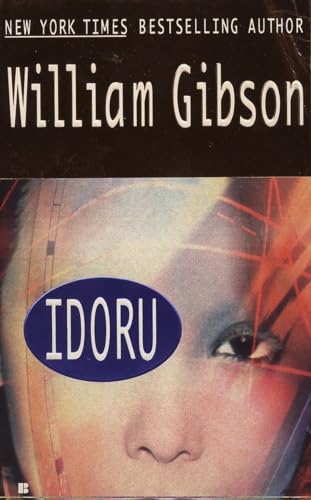
› Find signed collectible books: 'Idoru'
Colin Laney is a data analyst with a talent for seeing patterns, or nodes, as he calls them, in the flow of information that is cyberspace. Chia McKenzie is a young member of the fan club for the Japanese pop supergroup Lo/Rez. When a rumour involving the lead singer of Lo/Rez and an idoru, a Japanese virtual-reality singing idol, brings both Laney and Chia to Tokyo, the resulting web of events involves Russian criminals, Japanese schoolgirls, and illegal nanotechnology. And it's all set in a Tokyo that is literally growing and changing around the characters, rising from the rubble of a major earthquake.
Idoru is not William Gibson's best novel, but it is a good example of his primary strength: creating worlds that don't so much show the future as expose the world we already live in, a world of computers, information, mega-corporations, pop art, tabloids, and rock & roll. Idoru works not only on its own terms but also as a set-up for Gibson's next novel, All Tomorrow's Parties. Gibson broadens his perspective by including a wider range of characters than in his earlier novels, but mainly Idoru moves Gibson's work forward by pushing further into his familiar territory. It is the work not of a writer who is discovering new topics, but of one who is re-examining his old ones, bringing greater depth and maturity to his art in the process. --Greg L. Johnson [via]
More editions of Idoru:
› Find signed collectible books: 'Johnny Mnemonic'
1st large trade film screenplay edition paperback colour stills section new copy [via]
› Find signed collectible books: 'Johnny Mnemonic'
film 1st edition 1st printing paperback, fine [via]
More editions of Johnny Mnemonic:
› Find signed collectible books: 'Mona Lisa Overdrive'
The last of the Sprawl trilogy: the AIs of Neuromancer have suffered a traumatized, cataclysmic coming to self-awareness and now haunt cyberspace as voodoo powers. Mona's pimp sells her to a plastic surgeon in New York and she's turned overnight into someone else. The pimp winds up dead. Mona weeps for him. She's a sweet, dumb girl...so far. Angie the famous Hollywood stim star has started remembering things. Despite the efforts of studio bosses to keep her in ignorance, Angie will discover who she really is...and why she doesn't need to jack into the Matrix in order to enter cyberspace. In the depths of the rustbelt, the ring of steel garbage and toxic waste surrounding the Sprawl, Gentry obsessively seeks the darkest secrets of the Matrix. Seeking rapture. When an impossibly tall and powerful skyscraper of data appears suddenly in the landscape of the Matrix, Gentry is ready for it, Angie is part of it, and Mona is set for overdrive. Rapture is on the agenda for all three, but others greedy for money and power will fight them to the death. [via]
More editions of Mona Lisa Overdrive:
› Find signed collectible books: 'Neuromancer'
Here is the novel that started it all, launching the cyberpunk generation, and the first novel to win the holy trinity of science fiction: the Hugo Award, the Nebula Award and the Philip K. Dick Award. With Neuromancer, William Gibson introduced the world to cyberspace--and science fiction has never been the same.
Case was the hottest computer cowboy cruising the information superhighway--jacking his consciousness into cyberspace, soaring through tactile lattices of data and logic, rustling encoded secrets for anyone with the money to buy his skills. Then he double-crossed the wrong people, who caught up with him in a big way--and burned the talent out of his brain, micron by micron. Banished from cyberspace, trapped in the meat of his physical body, Case courted death in the high-tech underworld. Until a shadowy conspiracy offered him a second chance--and a cure--for a price.... [via]
› Find signed collectible books: 'Pattern Recognition'
The first of William Gibson's usually futuristic novels to be set in the present, Pattern Recognition is a masterful snapshot of modern consumer culture and hipster esoterica. Set in London, Tokyo, and Moscow, Pattern Recognition takes the reader on a tour of a global village inhabited by power-hungry marketeers, industrial saboteurs, high-end hackers, Russian mob bosses, Internet fan-boys, techno archeologists, washed-out spies, cultural documentarians, and our heroine Cayce Pollard--a soothsaying "cool hunter" with an allergy to brand names.
Pollard is among a cult-like group of Internet obsessives that strives to find meaning and patterns within a mysterious collection of video moments, merely called "the footage," let loose onto the Internet by an unknown source. Her hobby and work collide when a megalomaniac client hires her to track down whoever is behind the footage. Cayce's quest will take her in and out of harm's way in a high-stakes game that ultimately coincides with her desire to reconcile her fathers disappearance during the September 11 attacks in New York.
Although he forgoes his usual future-think tactics, this is very much a William Gibson novel, more so for fans who realize that Gibson's brilliance lies not in constructing new futures but in using astute observations of present-day cultural flotsam to create those futures. With Pattern Recognition, Gibson skips the extrapolation and focuses his acumen on our confusing contemporary world, using the precocious Pollard to personify and humanize the uncertain anxiety, optimistic hope, and downright fear many feel when looking to the future. The novel is filled with Gibson's lyric descriptions and astute observations of modern life, making it worth the read for both cool hunters and their prey. --Jeremy Pugh [via]
› Find signed collectible books: 'Virtual Light'
The author of Neuromancer takes you to the vividly realized near future of 2005. Welcome to NoCal and SoCal, the uneasy sister-states of what used to be California. Here the millennium has come and gone, leaving in its wake only stunned survivors. In Los Angeles, Berry Rydell is a former armed-response rentacop now working for a bounty hunter. Chevette Washington is a bicycle messenger turned pick-pocket who impulsively snatches a pair of innocent-looking sunglasses. But these are no ordinary shades. What you can see through these high-tech specs can make you rich--or get you killed. Now Berry and Chevette are on the run, zeroing in on the digitalized heart of DatAmerica, where pure information is the greatest high. And a mind can be a terrible thing to crash. [via]
More editions of Virtual Light:
Founded in 1997, BookFinder.com has become a leading book price comparison site:
Find and compare hundreds of millions of new books, used books, rare books and out of print books from over 100,000 booksellers and 60+ websites worldwide.