
| Search | About | Preferences | Feedback | Help | |
| Find any book at the best price. | ||
Peter Robert Lamont Brown (Brown, Peter Robert Lamont)
used books, rare books and new books
› Find all books by 'Peter Robert Lamont Brown' and compare prices› Find signed collectible books by 'Peter Robert Lamont Brown'
 Augustine of Hippoby Peter Robert Lamont BrownISBN 9780571204953 (978-0-571-20495-3)
Softcover, Faber & Faber Ltd, 2000
Find This Book
› Find signed collectible books: 'Augustine of Hippo' Authority and the Sacred: Aspects of the Christianisation of the Roman Worldby Peter Robert Lamont BrownISBN 9780521499040 (978-0-521-49904-0)
Softcover, Cambridge University Press, 1995
Find This Book
› Find signed collectible books: 'Authority and the Sacred: Aspects of the Christianisation of the Roman World'More editions of Authority and the Sacred: Aspects of the Christianisation of the Roman World:
- Authority and the Sacred: Aspects of the Christianisation of the Roman World: ISBN 9780521495578 (978-0-521-49557-8)
Hardcover, Cambridge University Press, 1995 - Authority and the Sacred: Aspects of the Christianisation of the Roman World: ISBN 9780521499040 (978-0-521-49904-0)
Softcover, Cambridge University Press, 1995
- Authority and the Sacred: Aspects of the Christianisation of the Roman World: ISBN 9780521495578 (978-0-521-49557-8)
 Confessions: Books I-Xiiiby Peter Robert Lamont BrownISBN 9780872201873 (978-0-87220-187-3)
Hardcover, Hackett Pub Co Inc, 1993
Find This Book
› Find signed collectible books: 'Confessions: Books I-Xiii'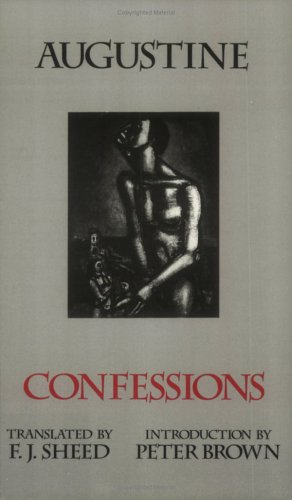 Confessions: Books I-Xiiiby Peter Robert Lamont BrownISBN 9780872201866 (978-0-87220-186-6)
Softcover, Hackett Pub Co Inc, 1993
Find This Book
› Find signed collectible books: 'Confessions: Books I-Xiii' Religion and society in the age of Saint Augustineby Peter Robert Lamont BrownISBN 9780060105549 (978-0-06-010554-9)
Hardcover, Harper & Row, 1972
Find This Book
› Find signed collectible books: 'Religion and society in the age of Saint Augustine'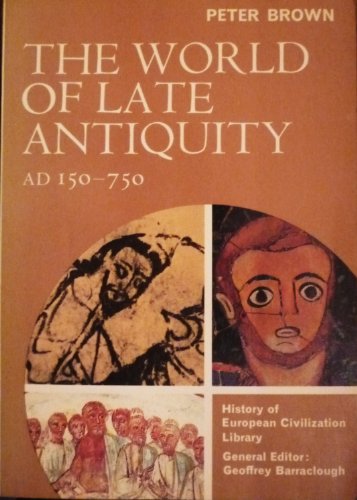 The World of Late Antiquity: Ad 150-750 (History of European Civilization Library)by Peter Robert Lamont BrownISBN 9780155976337 (978-0-15-597633-7)
Softcover, Harcourt College Pub, 1971
Find This Book
› Find signed collectible books: 'The World of Late Antiquity: Ad 150-750 (History of European Civilization Library)'