
| Search | About | Preferences | Feedback | Help | |
| Find any book at the best price. | ||
Henry Hazlitt (Hazlitt, Henry)
used books, rare books and new books
› Find all books by 'Henry Hazlitt' and compare prices› Find signed collectible books by 'Henry Hazlitt'
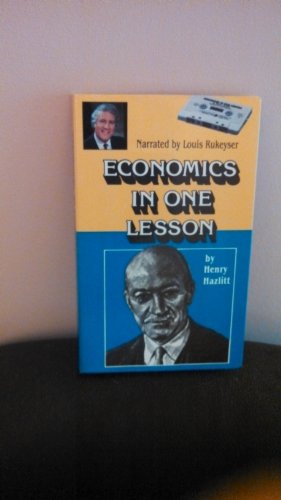 Economics in 1 Lessonby Henry HazlittISBN 9780938935452 (978-0-938935-45-2)
Knowledge Products, 2002
Find This Book
› Find signed collectible books: 'Economics in 1 Lesson' The Foundations of Moralityby Henry HazlittISBN 9781452858159 (978-1-4528-5815-9)
Softcover, CreateSpace Independent Publishing Platform, 2010
Find This Book
› Find signed collectible books: 'The Foundations of Morality' Freedom In America (1945)by Virgil Jordan, Henry HazlittISBN 9781169829114 (978-1-169-82911-4)
Softcover, Kessinger Publishing, 2010
Find This Book
› Find signed collectible books: 'Freedom In America (1945)' From Bretton Woods to World Inflation: A Study of the Causes and Consequencesby Henry HazlittISBN 9780895266170 (978-0-89526-617-0)
Hardcover, Gateway Books, 1984
Find This Book
› Find signed collectible books: 'From Bretton Woods to World Inflation: A Study of the Causes and Consequences' The Inflation Crisis and How to Resolve Itby Henry HazlittISBN 9781933550565 (978-1-933550-56-5)
Hardcover, Mises Institute, 2009
Find This Book
› Find signed collectible books: 'The Inflation Crisis and How to Resolve It' Is Politics Insoluble?by Henry HazlittISBN 9781172529056 (978-1-172-52905-6)
Softcover, Nabu Press, 2010
Find This Book
› Find signed collectible books: 'Is Politics Insoluble?' A New Constitution Now (1942)by Henry HazlittISBN 9781169830219 (978-1-169-83021-9)
Softcover, Kessinger Publishing, 2010
Find This Book
› Find signed collectible books: 'A New Constitution Now (1942)' Thinking as a Scienceby Henry HazlittISBN 9781417925674 (978-1-4179-2567-4)
Softcover, Kessinger Publishing, 2005
Find This Book
› Find signed collectible books: 'Thinking as a Science' Time Will Run Back: A Novel About the Rediscovery of Capitalismby Henry HazlittISBN 9780819154705 (978-0-8191-5470-5)
Softcover, University Press of America, 1986
Find This Book
› Find signed collectible books: 'Time Will Run Back: A Novel About the Rediscovery of Capitalism' What You Should Know About Inflation (1960)by Henry HazlittISBN 9781169831506 (978-1-169-83150-6)
Hardcover, Kessinger Publishing, 2010
Find This Book
› Find signed collectible books: 'What You Should Know About Inflation (1960)' Will Dollars Save The World? (1947)by Henry HazlittISBN 9781169831261 (978-1-169-83126-1)
Hardcover, Kessinger Publishing, 2010
Find This Book
› Find signed collectible books: 'Will Dollars Save The World? (1947)'