| Search | About | Preferences | Interact | Help | |
| 150 million books. 1 search engine. | ||
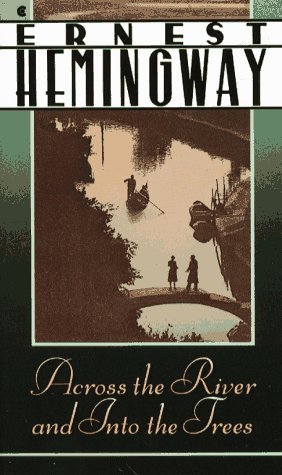
› Find signed collectible books: 'Across the River and into the Trees'
More editions of Across the River and into the Trees:

› Find signed collectible books: 'By-Line'
More editions of By-Line:
› Find signed collectible books: 'The Complete Short Stories of Ernest Hemingway : The Finca Vigia Edition'
The Finca Vigia edition of The Complete Short Stories of Ernest Hemingway collects for the first time the complete work of the acknowledged master of the genre. This landmark collection includes the entire contents of The First Forty-Nine, the first omnibus volume of Hemingway's works publishedin 1939, as well as 14 stories published subsequently in other books or magazines and seven works published for the first time in the hardcover edition. [via]
More editions of The Complete Short Stories of Ernest Hemingway : The Finca Vigia Edition:

› Find signed collectible books: 'Dangerous Summer'
More editions of Dangerous Summer:
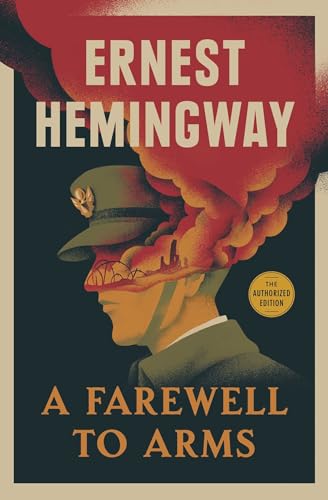
› Find signed collectible books: 'A Farewell to Arms'
As a youth of 18, Ernest Hemingway was eager to fight in the Great War. Poor vision kept him out of the army, so he joined the ambulance corps instead and was sent to France. Then he transferred to Italy where he became the first American wounded in that country during World War I. Hemingway came out of the European battlefields with a medal for valor and a wealth of experience that he would, 10 years later, spin into literary gold with A Farewell to Arms. This is the story of Lieutenant Henry, an American, and Catherine Barkley, a British nurse. The two meet in Italy, and almost immediately Hemingway sets up the central tension of the novel: the tenuous nature of love in a time of war. During their first encounter, Catherine tells Henry about her fiancé of eight years who had been killed the year before in the Somme. Explaining why she hadn't married him, she says she was afraid marriage would be bad for him, then admits:
I wanted to do something for him. You see, I didn't care about the other thing and he could have had it all. He could have had anything he wanted if I would have known. I would have married him or anything. I know all about it now. But then he wanted to go to war and I didn't know.The two begin an affair, with Henry quite convinced that he "did not love Catherine Barkley nor had any idea of loving her. This was a game, like bridge, in which you said things instead of playing cards." Soon enough, however, the game turns serious for both of them and ultimately Henry ends up deserting to be with Catherine.
Hemingway was not known for either unbridled optimism or happy endings, and A Farewell to Arms, like his other novels (For Whom the Bell Tolls, The Sun Also Rises, and To Have and Have Not), offers neither. What it does provide is an unblinking portrayal of men and women behaving with grace under pressure, both physical and psychological, and somehow finding the courage to go on in the face of certain loss. --Alix Wilber [via]
› Find signed collectible books: 'For Whom the Bell Tolls'
For Whom the Bell Tolls begins and ends in a pine-scented forest, somewhere in Spain. The year is 1937 and the Spanish Civil War is in full swing. Robert Jordan, a demolitions expert attached to the International Brigades, lies "flat on the brown, pine-needled floor of the forest, his chin on his folded arms, and high overhead the wind blew in the tops of the pine trees." The sylvan setting, however, is at sharp odds with the reason Jordan is there: he has come to blow up a bridge on behalf of the antifascist guerrilla forces. He hopes he'll be able to rely on their local leader, Pablo, to help carry out the mission, but upon meeting him, Jordan has his doubts: "I don't like that sadness, he thought. That sadness is bad. That's the sadness they get before they quit or before they betray. That is the sadness that comes before the sell-out." For Pablo, it seems, has had enough of the war. He has amassed for himself a small herd of horses and wants only to stay quietly in the hills and attract as little attention as possible. Jordan's arrival--and his mission--have seriously alarmed him.
"I am tired of being hunted. Here we are all right. Now if you blow a bridge here, we will be hunted. If they know we are here and hunt for us with planes, they will find us. If they send Moors to hunt us out, they will find us and we must go. I am tired of all this. You hear?" He turned to Robert Jordan. "What right have you, a foreigner, to come to me and tell me what I must do?"In one short chapter Hemingway lays out the blueprint for what is to come: Jordan's sense of duty versus Pablo's dangerous self-interest and weariness with the war. Complicating matters even more are two members of the guerrilla leader's small band: his "woman" Pilar, and Maria, a young woman whom Pablo rescued from a Republican prison train. Unlike her man, Pilar is still fiercely devoted to the cause and as Pablo's loyalty wanes, she becomes the moral center of the group. Soon Jordan finds himself caught between the two, even as his own resolve is tested by his growing feelings for Maria.
For Whom the Bell Tolls combines two of the author's recurring obsessions: war and personal honor. The pivotal battle scene involving El Sordo's last stand is a showcase for Hemingway's narrative powers, but the quieter, ongoing conflict within Robert Jordan as he struggles to fulfill his mission perhaps at the cost of his own life is a testament to his creator's psychological acuity. By turns brutal and compassionate, it is arguably Hemingway's most mature work and one of the best war novels of the 20th century. --Alix Wilber [via]
More editions of For Whom the Bell Tolls:
› Find signed collectible books: 'The Garden of Eden'
More editions of The Garden of Eden:
› Find signed collectible books: 'Green Hills of Africa'
"There are some things which cannot be learned quickly, and time, which is all we have, must be paid heavily for their acquiring. They are the very simplest things, and because it takes a man's life to know them the little new that each man gets from life is very costly and the only heritage he has to leave."-- ERNEST HEMINGWAY
In the winter of 1933, Ernest Hemingway and his wife Pauline set out on a two-month safari in the big-game country of East Africa, camping out on the great Serengeti Plain at the foot of magnificent Mount Kilimanjaro. "I had quite a trip," the author told his friend Philip Percival, with characteristic understatement.
Green Hills of Africa is Hemingway's account of that expedition, of what it taught him about Africa and himself. Richly evocative of the region's natural beauty, tremendously alive to its character, culture, and customs, and pregnant with a hard-won wisdom gained from the extraordinary situations it describes, it is widely held to be one of the twentieth century's classic travelogues. [via]
More editions of Green Hills of Africa:

› Find signed collectible books: 'In Our Time'
More editions of In Our Time:

› Find signed collectible books: 'Islands in the Stream'
This is the three part novel that Hemingway was writing at the time of his death. [via]
› Find signed collectible books: 'Men Without Women'
CLASSIC SHORT STORIES FROM THE MASTER OF AMERICAN FICTION
First published in 1927, Men Without Women represents some of Hemingway's most important and compelling early writing. In these fourteen stories, Hemingway begins to examine the themes that would occupy his later works: the casualties of war, the often uneasy relationship between men and women, sport and sportsmanship. In "Banal Story," Hemingway offers a lasting tribute to the famed matador Maera. "In Another Country" tells of an Italian major recovering from war wounds as he mourns the untimely death of his wife. "The Killers" is the hard-edged story about two Chicago gunmen and their potential victim. Nick Adams makes an appearance in "Ten Indians," in which he is presumably betrayed by his Indian girlfriend, Prudence. And "Hills Like White Elephants" is a young couple's subtle, heartwrenching discussion of abortion. Pared down, gritty, and subtly expressive, these stories show the young Hemingway emerging as America's finest short story writer. [via]
More editions of Men Without Women:
› Find signed collectible books: 'A Moveable Feast'
In the preface to A Moveable Feast, Hemingway remarks casually that "if the reader prefers, this book may be regarded as fiction"--and, indeed, fact or fiction, it doesn't matter, for his slim memoir of Paris in the 1920s is as enchanting as anything made up and has become the stuff of legend. Paris in the '20s! Hemingway and his first wife, Hadley, lived happily on $5 a day and still had money for drinks at the Closerie des Lilas, skiing in the Alps, and fishing trips to Spain. On every corner and at every café table, there were the most extraordinary people living wonderful lives and telling fantastic stories. Gertrude Stein invited Hemingway to come every afternoon and sip "fragrant, colorless alcohols" and chat admit her great pictures. He taught Ezra Pound how to box, gossiped with James Joyce, caroused with the fatally insecure Scott Fitzgerald (the acid portraits of him and his wife, Zelda, are notorious). Meanwhile, Hemingway invented a new way of writing based on this simple premise: "All you have to do is write one true sentence. Write the truest sentence you know."
Hemingway beautifully captures the fragile magic of a special time and place, and he manages to be nostalgic without hitting any false notes of sentimentality. "This is how Paris was in the early days when we were very poor and very happy," he concludes. Originally published in 1964, three years after his suicide, A Moveable Feast was the first of his posthumous books and remains the best. --David Laskin [via]
More editions of A Moveable Feast:
› Find signed collectible books: 'The Old Man and the Sea'
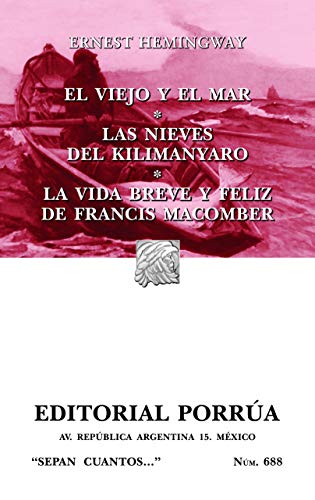
Here, for a change, is a fish tale that actually does honor to the author. In fact The Old Man and the Sea revived Ernest Hemingway's career, which was foundering under the weight of such postwar stinkers as Across the River and into the Trees. It also led directly to his receipt of the Nobel Prize in 1954 (an award Hemingway gladly accepted, despite his earlier observation that "no son of a bitch that ever won the Nobel Prize ever wrote anything worth reading afterwards"). A half century later, it's still easy to see why. This tale of an aged Cuban fisherman going head-to-head (or hand-to-fin) with a magnificent marlin encapsulates Hemingway's favorite motifs of physical and moral challenge. Yet Santiago is too old and infirm to partake of the gun-toting machismo that disfigured much of the author's later work: "The brown blotches of the benevolent skin cancer the sun brings from its reflection on the tropic sea were on his cheeks. The blotches ran well down the sides of his face and his hands had the deep-creased scars from handling heavy fish on the cords." Hemingway's style, too, reverts to those superb snapshots of perception that won him his initial fame:
Just before it was dark, as they passed a great island of Sargasso weed that heaved and swung in the light sea as though the ocean were making love with something under a yellow blanket, his small line was taken by a dolphin. He saw it first when it jumped in the air, true gold in the last of the sun and bending and flapping wildly in the air.If a younger Hemingway had written this novella, Santiago most likely would have towed the enormous fish back to port and posed for a triumphal photograph--just as the author delighted in doing, circa 1935. Instead his prize gets devoured by a school of sharks. Returning with little more than a skeleton, he takes to his bed and, in the very last line, cements his identification with his creator: "The old man was dreaming about the lions." Perhaps there's some allegory of art and experience floating around in there somewhere--but The Old Man and the Sea was, in any case, the last great catch of Hemingway's career. --James Marcus [via]

› Find signed collectible books: 'The Short Stories of Ernest Hemingway'
More editions of The Short Stories of Ernest Hemingway:
› Find signed collectible books: 'The Snows of Kilimanjaro and Other Stories'
Returning from a Kenyan safari in 1932, Ernest Hemingway quickly devised a literary trophy to add to his stash of buffalo hides and rhino horns. To this day, Green Hills of Africa seems an almost perverse paean to the thrills of bloodshed, in which the author cuts one notch after another in his gun barrel and declares, "I did not mind killing anything." Four years later, however, Hemingway came up with a more accomplished spin on his African experiences--a pair of them, in fact, which he collected with eight other tales in The Snows of Kilimanjaro. The title story is a meditation on corruption and mortality, two subjects that were already beginning to preoccupy the 37-year-old author. As the protagonist perishes of gangrene out in the bush, he recognizes his own failure of nerve as a writer:
Now he would never write the things that he had saved to write until he knew enough to write them well. Well, he would not have to fail at trying to write them either. Maybe you could never write them, and that was why you put them off and delayed the starting. Well he would never know, now.In the story, at least, the hero gets some points for stoic acceptance, as well as an epiphanic vision of Kilimanjaro's summit, "wide as all the world, great, high, and unbelievably white in the sun." (The movie version is another matter: Gregory Peck makes it back to the hospital, loses a leg, and is a better person for it.) But Hemingway's other great white hunter, in "The Short Happy Life of Francis Macomber," is granted a less dignified exit. This time the issue is cowardice, another of Papa's bugaboos: poor Francis is too wimpy to face down a wounded lion, let alone satisfy his treacherous wife in bed. Yet he does manage a last-minute triumph before dying--an absolute assertion of courage--which makes the title a hair less ironic than it initially seems. No wonder these are two of the highest-caliber (so to speak) tales in the Hemingway canon. --Bob Brandeis [via]
More editions of The Snows of Kilimanjaro and Other Stories:
› Find signed collectible books: 'The Sun Also Rises'
The Sun Also Rises first appeared in 1926, and yet it's as fresh and clean and fine as it ever was, maybe finer. Hemingway's famously plain declarative sentences linger in the mind like poetry: "Brett was damned good-looking. She wore a slipover jersey sweater and a tweed skirt, and her hair was brushed back like a boy's. She started all that." His cast of thirtysomething dissolute expatriates--Brett and her drunken fiancé, Mike Campbell, the unhappy Princeton Jewish boxer Robert Cohn, the sardonic novelist Bill Gorton--are as familiar as the "cool crowd" we all once knew. No wonder this quintessential lost-generation novel has inspired several generations of imitators, in style as well as lifestyle.
Jake Barnes, Hemingway's narrator with a mysterious war wound that has left him sexually incapable, is the heart and soul of the book. Brett, the beautiful, doomed English woman he adores, provides the glamour of natural chic and sexual unattainability. Alcohol and post-World War I anomie fuel the plot: weary of drinking and dancing in Paris cafés, the expatriate gang decamps for the Spanish town of Pamplona for the "wonderful nightmare" of a week-long fiesta. Brett, with fiancé and ex-lover Cohn in tow, breaks hearts all around until she falls, briefly, for the handsome teenage bullfighter Pedro Romero. "My God! he's a lovely boy," she tells Jake. "And how I would love to see him get into those clothes. He must use a shoe-horn." Whereupon the party disbands.
But what's most shocking about the book is its lean, adjective-free style. The Sun Also Rises is Hemingway's masterpiece--one of them, anyway--and no matter how many times you've read it or how you feel about the manners and morals of the characters, you won't be able to resist its spell. This is a classic that really does live up to its reputation. --David Laskin [via]
More editions of The Sun Also Rises:
› Find signed collectible books: 'To Have and Have Not'
First things first: readers coming to To Have and Have Not after seeing the Bogart/Bacall film should be forewarned that about the only thing the two have in common is the title. The movie concerns a brave fishing-boat captain in World War II-era Martinique who aids the French Resistance, battles the Nazis, and gets the girl in the end. The novel concerns a broke fishing-boat captain who agrees to carry contraband between Cuba and Florida in order to feed his wife and daughters. Of the two, the novel is by far the darker, more complex work.
The first time we meet Harry Morgan, he is sitting in a Havana bar watching a gun battle raging out in the street. After seeing a Cuban get his head blown off with a Luger, Morgan reacts with typical Hemingway understatement: "I took a quick one out of the first bottle I saw open and I couldn't tell you yet what it was. The whole thing made me feel pretty bad." Still feeling bad, Harry heads out in his boat on a charter fishing expedition for which he is later stiffed by the client. With not even enough money to fill his gas tanks, he is forced to agree to smuggle some illegal Chinese for the mysterious Mr. Sing. From there it's just a small step to carrying liquor--a disastrous run that ends when Harry loses an arm and his boat. Once Harry gets mixed up in the brewing Cuban revolution, however, even those losses seem small compared to what's at stake now: his very life.
Hemingway tells most of this story in the third person, but, significantly, he brackets the whole with a section at the beginning told from Harry's perspective and a short, heart-wrenching chapter at the end narrated by his wife, Marie. In between there is adventure, danger, betrayal, and death, but this novel begins and ends with the tough and tender portrait of a man who plays the cards that are dealt him with courage and dignity, long after hope is gone. --Alix Wilber [via]
More editions of To Have and Have Not:

› Find signed collectible books: 'Winner Take Nothing'
More editions of Winner Take Nothing:
Founded in 1997, BookFinder.com has become a leading book price comparison site:
Find and compare hundreds of millions of new books, used books, rare books and out of print books from over 100,000 booksellers and 60+ websites worldwide.